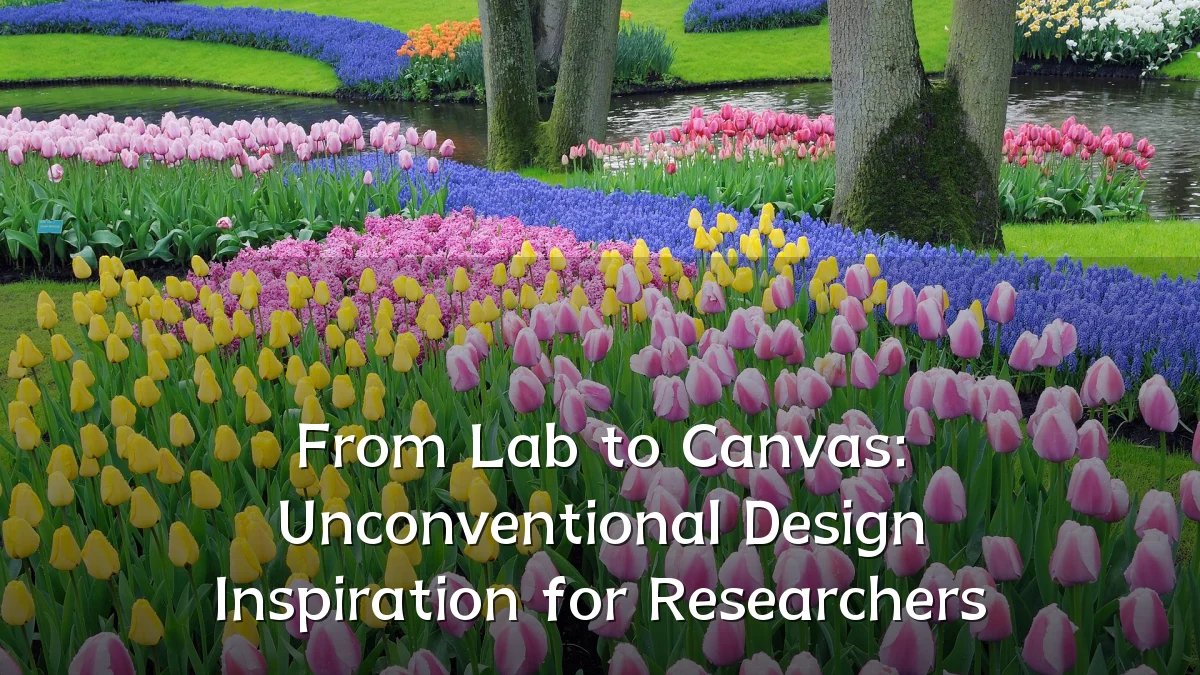
From Lab to Canvas: Unconventional Design Inspiration for Researchers
Recent Trends
In the past few years, academic and industrial research settings have seen a modest but noticeable uptick in activities that deliberately bridge laboratory methods with artistic or design-driven practices. Workshops pairing scientists with visual artists, short residencies in which researchers spend time in studio environments, and internal “hackathons” that incorporate design thinking frameworks are among the recurring formats. Some institutions have begun offering elective modules on design principles tailored for STEM graduate students. A parallel trend is the growing interest in data sonification and generative visualisation, where researchers translate numerical outputs into sound or spatial forms to uncover patterns they might otherwise miss.

- Cross-disciplinary workshops co-hosted by science and art departments.
- Short-term creative residencies for early-career researchers.
- Adoption of design sprints to reframe experimental challenges.
- Rise of open-source tools that allow non-designers to prototype visual ideas quickly.
Background
The boundary between laboratory work and creative design has historically been porous but often undervalued. Figures such as Santiago Ramón y Cajal, who made intricate drawings of neural structures, or the Bauhaus movement’s emphasis on material exploration, exemplify how visual thinking has long advanced scientific insight. Yet for many researchers today, design remains an afterthought—a matter of formatting figures for publication rather than a generative part of inquiry. The current push toward unconventional inspiration seeks to reclaim that earlier integrative spirit, acknowledging that rigid methodological routines can suppress the associative thinking needed for breakthrough ideas.

“When you treat design as just decoration, you lose the chance to see your data the way an artist might—full of relationships that don’t fit a spreadsheet.” — paraphrase from a recent panel discussion among research methodologists.
User Concerns
Researchers considering borrowing from design disciplines often raise practical and cultural reservations. The most common concerns revolve around time, relevance, and institutional receptiveness.
- Time scarcity: Experimentation with design techniques is perceived as a distraction from pressing grant deadlines and publication targets.
- Perceived irrelevance: Some worry that design exercises yield subjective results unsuited to rigorous peer review or reproducibility standards.
- Lack of resources: Access to design software, materials, or mentors with cross-disciplinary experience can be limited, especially in smaller departments.
- Cultural friction: Lab environments that prioritize efficiency may view open-ended creative exploration as wasteful or unprofessional.
Likely Impact
If these practices continue to gain traction, the most tangible effects are likely to emerge in how researchers approach problem framing, data interpretation, and collaboration. Anecdotal evidence from early adopters suggests that periodic immersion in design activities can lead to more diverse hypothesis generation and more accessible presentations of complex results.
- Improved pattern recognition: Exercises in visual abstraction or material manipulation can help researchers notice outliers or clusters they might otherwise dismiss.
- Enhanced communication: Figures, diagrams, and presentations produced with design awareness are often better understood by non-specialist audiences and funding panels.
- Cross-pollination: Teams that include a design-trained member frequently report more iterative and flexible experimental planning.
- Potential for wasted effort: Without clear frameworks, unstructured design exploration can consume time with little yield—an outcome that critics highlight.
What to Watch Next
The next phase of this trend may hinge on how research institutions operationalise unconventional design inspiration without diluting its creative core. Several developments are worth monitoring:
- AI-assisted generative design tools that allow researchers to rapidly produce and test visual or spatial alternatives from their own data sets.
- Dedicated “design fellows” embedded in research groups, a model already piloted by a handful of university innovation labs.
- Curriculum changes that add a required design-thinking module to PhD training programs in empirical sciences.
- Metrics for impact — whether journals, grant reviewers, or tenure committees begin to value design literacy as a methodological skill.
While no single formula guarantees that art will improve science, the gradual loosening of disciplinary boundaries suggests that researchers who learn to move between lab bench and canvas—metaphorically or literally—may find unexpected sources of insight. The coming years will test whether these unconventional approaches can scale beyond individual enthusiasm and become a recognized part of research culture.